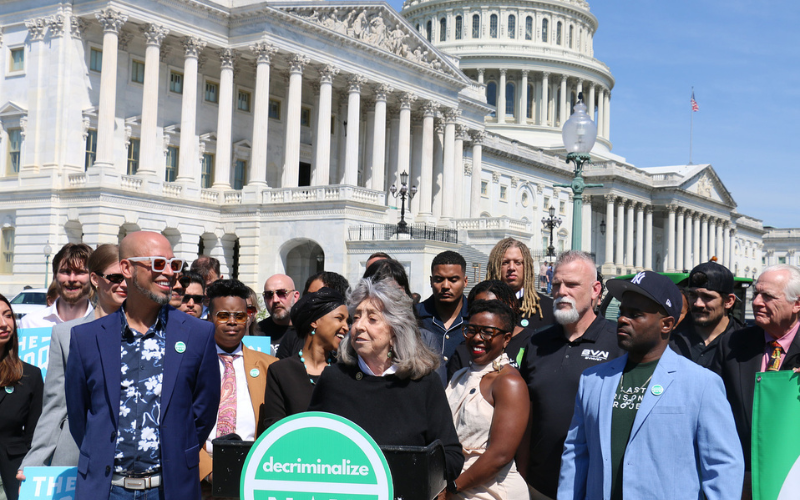
In the district belonging to Congresswoman Dina Titus, the cannabis conversation is in full bloom. She may be new to her chairmanship at the Cannabis Caucus, but she is no stranger to the issues at hand.
Nevada has been an early adopter of the cannabis initiative: allowing it for medical uses, then for recreational uses, and now the first in the country to have cannabis lounges. The Evidence-Based Drug Policy Act (EBDPA) hopes to further this mission through education, research and regulation.
Results Through Research
Titus sees promise in the EBDPA either enabling legislation, amending the appropriations process, or helping some of the regulatory issues get resolved through the current administration. Research will help veterans gain access to cannabis and ensure the federal government cannot intervene when states have made it legal.
The Cannabis Caucus seeks to help veterans talk about the use of cannabis for PTSD and pain management. The Department of Veterans Affairs (VA) needs to be able to recommend or at least talk about cannabis as an alternative to highly addictive and dangerous opioids. If someone can’t talk about it with their VA doctor, that leads to self-medicating and uncertainty about reactions with other drugs a person has already been taking.
“The main thing is that we want to be sure that people have access to cannabis, whether it’s for medical or recreational purposes,” Titus said.
Legislation Dream Team
The Cannabis Caucus is currently made up of four key members coordinating across four different sectors—two Democrats and two Republicans. Their combined efforts hope to ensure that cannabis operators can exist like regular businesses, and cannabis users can be less vulnerable without fear when medicating or providing for others.
They each recognize that cannabis has become more legitimate as it spreads to more states, and their mission is to relay that message in Washington. The Cannabis Caucus aims to remove the roadblocks hindering cannabis from federal legalization to remove problems for operators.
“They can’t do banking, like other small businesses,” advised Titus. “They can’t get the tax breaks. You have security issues, advertising issues, use of credit cards.”
Democrat Dina Titus brings her knowledge of banking into the equation, coming from Nevada which knows a thing or two about dealing with the flow of money. Democrat Ilhan Omar looks at it from the standpoint of social justice and expungement, rectifying the harm caused to people who have been displaced by outdated laws and restrictions.
Republican Brian Mast, a military veteran who lost both his legs in combat in Afghanistan, is fighting to de-stigmatize access and promote open discussions on cannabis as medicine. Republican David Joyce intends to remove marijuana from the list of federally controlled substances so it can be accessible nationwide and operate like other small businesses.
“We’re coming at it from all angles,” Titus emphasized.
Safety Through Advocacy
Titus emphasized that states must be able to do their own regulation without the federal government stepping in and undoing it or arresting people unjustly. Advocacy helps regulate the justice issue as a whole, and more importantly leads to safety.
Access to banking provides security, removing huge security risks for businesses. In the cannabis industry, operators need to do their banking and not have it considered a suspicious practice. Stigma needs to be removed so that banks don’t hesitate to take a company’s money.
“If you can’t put your money in a bank, where are you putting it – under the bed?” she joked.
Education Leads to Evolution
It all ties back to the research, having facts to back up the arguments. Conducting more studies that show cannabis is not harmful and not a gateway drug will have widely positive impacts. The more research there is on specific effects, the stronger the argument without it being called hearsay or hypothetical. This provides more guardrails because things generally become safer when they are regulated.
“The more information you have, the better off you are,” she explained.
Since most of the studies in the past have been looking for negative impacts of cannabis, Titus wants studies that look for the positive ones. That is a whole different kind of setup, a whole different approach. She taught at the University of Nevada Las Vegas (UNLV) for many years, where there is a policy institute that does this kind of research. They recognize that the more of these studies exist, the better it serves the broader agenda.
“That’s what the caucus does: it’s about educating as well as advocating,” explained Titus. “Any time you shine a light on something, more people understand how it works. It’s less scary and more likely that we’ll get something accomplished.”
Leading Towards Legalization
When it comes to policy, things move one step at a time. It all starts with the vote of the people. Medical paved the way, and now 70% of people in this country from both parties support making cannabis federally legal.
Many of those who lobby for this legislation are seniors, people who may have a child with epilepsy or a veteran with PTSD for example. They need cannabis to help with their own medical conditions. To go from medical to recreational, various regulations had to be set in place. Now more changes must take place to reach federal legalization.
Tax changes and banking laws will allow cannabis operators to run like regular businesses. They need the benefits of certain tax programs and provisions that any other small business has. Hurdles crept in as the current administration put a stop to the rescheduling of cannabis, but Dina Titus believes it must ultimately be de-scheduled. For now, rescheduling is crucial.
“[It must be] sold and regulated like we do alcohol, but let’s take it a step at a time with rescheduling,” Titus said.
Fortunately, Dina Titus and the Cannabis Caucus will keep working to inform the Justice Department through dedicated research.