
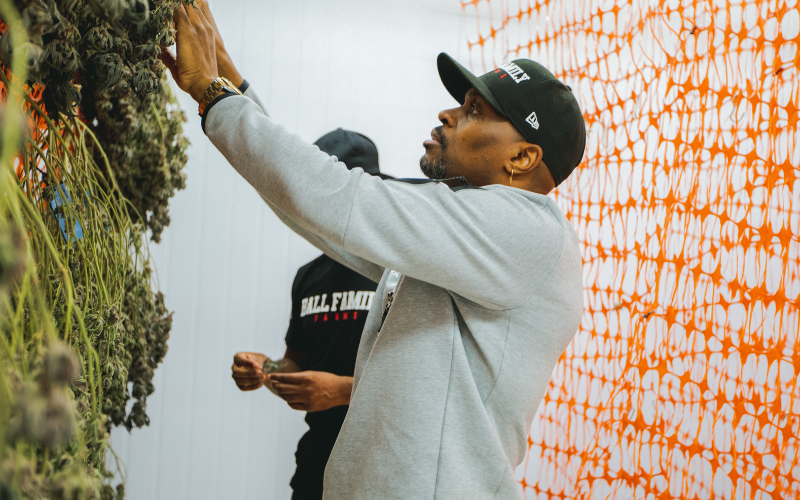

Chris Ball does not speak about cannabis the way most CEOs speak about their product. When he talks about cultivation, you hear the cadence of someone who has spent years in locker rooms and weight rooms, preparing for high-stakes competition. The founder of Ball Family Farms credits his discipline to professional football, which he says taught him lessons that would later prove indispensable in building one of Los Angeles’ most respected social equity cannabis brands.
“Sports taught me time management. It taught me how to work hard. It taught me there are no excuses,” Ball recalled. “Once you get to those levels, everybody’s talented. What separates the pros from the rest is the work ethic.”
That work ethic carried him from the uncertainty of grassroots cultivation into the upper echelon of California’s competitive cannabis market. Ball Family Farms emerged not as a benefactor of deep-pocketed investors but through persistence, patience, and a refusal to dilute quality for speed.
Patience
In an industry where many brands rushed to plant flags across multiple states, Ball chose a different playbook. At the peak of Ball Family Farms’ California success, when offers to expand poured in, he resisted.
“I watched my peers expand nationally,” he said. “But I didn’t have the resources to guarantee the same quality everywhere. Patience has been the biggest virtue of our success.”
That restraint allowed Ball Family Farms to hone its craft in California before moving into Arizona, where lower operating costs and a hunger for authentic cultivators presented an opening. “The economics made it a no-brainer,” Ball said. “Energy, rent, labor — all cheaper. But the product sells for the same. If we come in and really pour into this market, we can own it.”
For Ball, the approach to expansion should include culture in addition to economics. “Nobody’s just coming and giving Arizona that TLC,” he said. “I’ll do it. I’ll be the guy.”
Curation
While Ball brings discipline and vision, the company’s genetic innovation relies heavily on its younger talent. Chief among them is Zachary Alcatib, Ball Family Farms’ Head of Propagation and Procurement, who Ball credits with keeping the brand tapped into evolving consumer tastes.
“Zach is in his twenties. He’s got his ear to the ground in ways I don’t anymore,” Ball said. “He’s constantly plugged into the culture, on Instagram, watching new drops. He tells me what’s hot, and I can leverage my network to get the seeds or cuts.”
Together, Ball and Alcatib curate menus that reflect both cutting-edge trends and proprietary experimentation. In a market dominated for years by Lemon Cherry Gelato and Runtz, strains that have defied typical life cycles, Ball sees signs of change.
“Normally a strain stays hot for six months, maybe a year. But LCG and Runtz have been everywhere for six or seven years. It’s uncharted territory. Now, I feel people starting to get fed up, asking for something new,” he said.
In addition, Skittles, despite its difficult cultivation and low yields, is beginning to claim attention.
Infused Flower
Ball is outspoken when it comes to industry practices that compromise integrity. Few things draw his ire more than the infusion of artificial terpenes into flower.
“I’m not a fan. It takes away from the integrity of growing,” he said bluntly. “That’s cheating. You can grow mid-level flower, throw some terps on it, and pass it off to the consumer. But real smokers know that high ain’t right.”
He allows for concentrates like liquid diamonds to be added for potency but draws the line at altering terpene profiles. “You’re doing a disservice to the flower, to the cultivator, to the experience. In my opinion, it’s like turning steak into a Big Mac.”
Opportunity
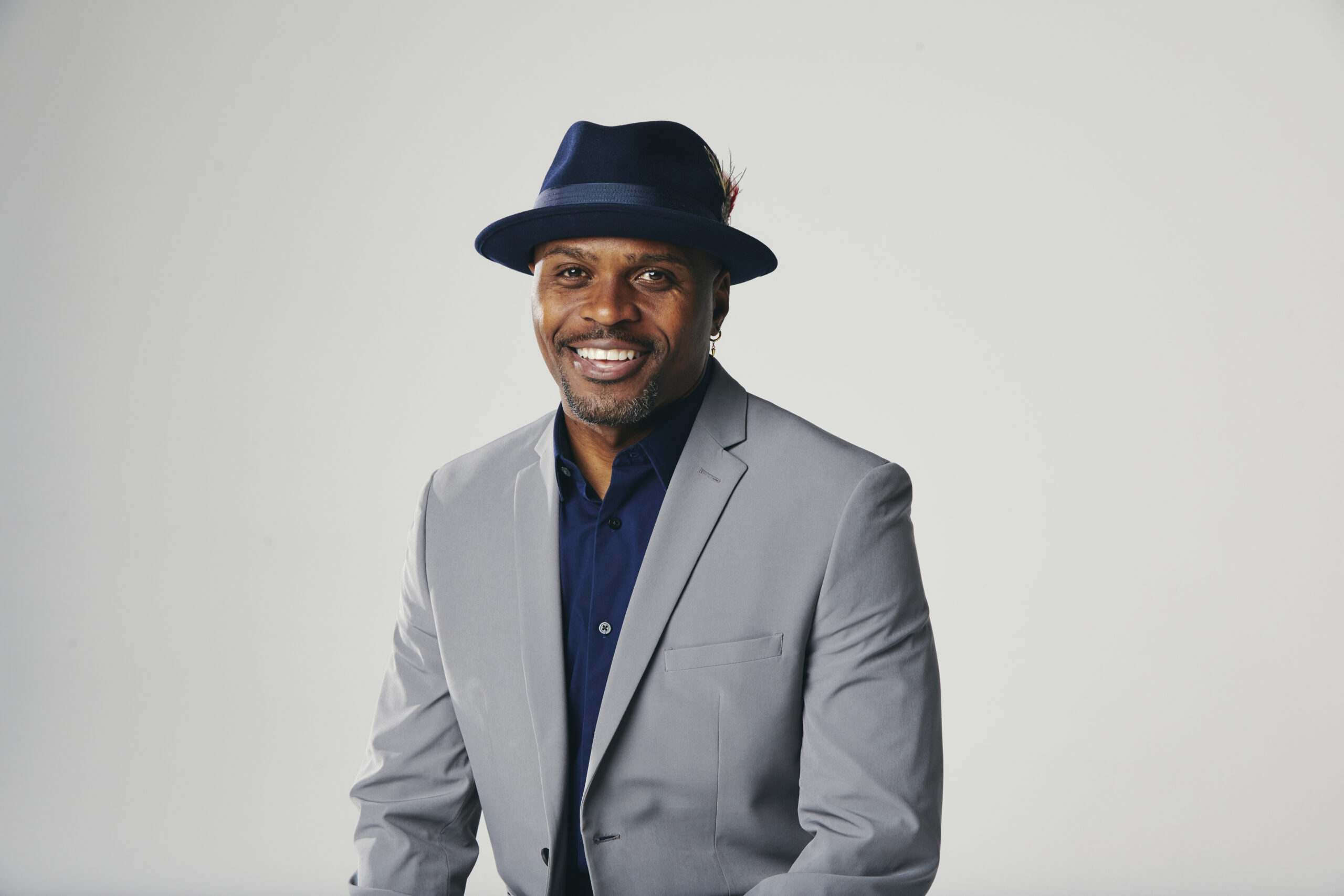
Perhaps the most emblematic expression of Ball Family Farms’ ethos is its Rare Breeds initiative. The program aims to bridge underground cultivators with the legal market—a concept born from the story of Alcatib himself.
When Alcatib first interviewed with Ball, he revealed he had been a longtime admirer, even sending a direct message years earlier asking for a chance. Initially hired at an entry-level position, he quickly proved his vision, bringing genetics that would become staples for the brand. When one of his selections won a major competition, Ball elevated him to lead pheno hunter.
“It was inspiring to see Zach go from a black-market grow with no recognition to a respected breeder with awards under his belt,” Ball said. “All we did was give him a platform to showcase his talents, and look where it’s taken him.”
The Rare Breeds initiative formalizes that pathway, giving other underground cultivators the same chance. “We don’t want to take all the credit. We just want to take the credit for giving you the platform,” Ball said. The program has already bolstered the company’s reputation, attracting collaborations and earning trophies at competitions like Z Olympics.
Also Read: How Big Pharma Plans to Destroy the Cannabis Industry As We Know It
Culture
Ball Family Farms is less about celebrity strains or aggressive scaling than about culture, a word Ball returns to repeatedly. It is a culture built from lessons as an athlete and applied to cultivation.
“You’ve got to love it,” said his publicist Ralina Shaw, watching Ball lose track of time in the grow rooms. “Otherwise you won’t make it. Not here, not in California.”
For Ball, the love is inseparable from the grind. He knows there are more “Zachs” out there—cultivators whose talents might otherwise go unseen. Rare Breeds, Arizona expansion, and his broader philosophy of patience all orbit around the principle of quality above expedience, authenticity over shortcuts.
“I’m going to go a thousand miles per hour until I achieve the result I want,” Ball said. “If I just keep going, I’ll eventually achieve it. That’s what happened to me in sports. And that’s what’s happening here.”