
Generations younger than Y, due to convenience and ubiquitous disposable vape carts and pre-rolls, have not only lost the ancient art of stoner mechanics, but many of them can’t even roll a joint. (Why should they, when they can drink their weed out of a can?) Gather round, young stoners, while I tell the tale of cannabis minus adaptogens and how to roll like an OG.
Now, there are so many devices that do everything from grinding up weed to packing it in a pre-roll. But still, it all starts with the right paper.
What Paper Size is Best?
Rolling papers come in various sizes, each designed for specific uses. Here are the most common sizes of rolling papers according to Blazy Susan’s blog:
Single-wide rolling papers are the smallest available, measuring around 68mm by 34mm (2.677” x 1.339”). They are ideal for smokers who prefer smaller joints and are easy to carry around, such as dog walkers. If you are new to rolling, single-wide papers are a great option to start with, as they are easy to handle and require less material.
1 1/4 rolling papers are the most popular size for rolling joints. They are slightly larger than single-wide papers, measuring around 76mm by 44mm (2.992” x 1.732”). They offer enough space to roll a decent-sized joint without being too bulky. 1 1/4 papers are perfect for a solo smoker or for a small group of friends.
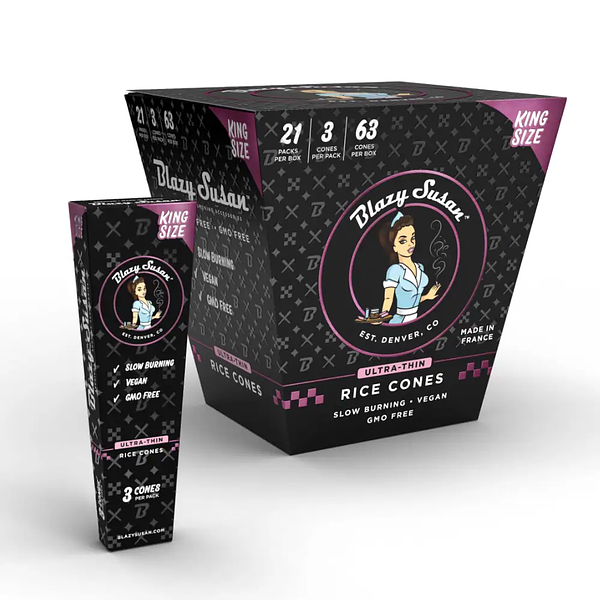
King Size Rolling Papers are larger than 1 1/4 papers, measuring around 110mm by 54mm (4.331” x 2.126”). They are ideal for smokers who prefer longer joints and can hold more flower than smaller papers. King-size papers are great for sharing with a group of friends or for a longer smoking session.
Cone Rolling Papers are pre-rolled cones. They are already assembled and therefore easy to fill, offering a convenient smoking experience. Cone papers come in various sizes, including small, medium, and large, depending on the preferred amount of flower to be added. Cone papers are ideal for smokers who want a hassle-free smoking experience and do not want to spend time rolling joints.
Also read: A Major Setback for FL Legislation: Last Week in Weed: 27–Feb. 3, 2026
Using Rolling Papers
For anyone new to rolling papers, the concept of rolling a joint may seem easy, but there is an art and science behind it. First, it’s best to start with ground-up flower. Don’t just place a sticky, broken-up bud into a rolling paper. It will be too dense to smoke properly.
First, grind it up into a chili-pepper flake-like consistency, either by hand or with a grinder. The best grinders will have a kief-catcher to collect all of the fallen trichomes, which can be sprinkled on the outside of the J, or dipped in, once it’s completed.
Rolling a joint too tightly can restrict airflow, making it difficult to inhale the smoke. On the other hand, if the joint is too loose, it will burn unevenly or repeatedly go out. Aim for a firm roll with just enough tightness that the joint stays together without being too compressed.
Rolling papers are a ubiquitous, inexpensive, and easy way to consume cannabis without bells and whistles or expensive gadgets. Rolling directly from fresh flower eliminates the guesswork over how much shake (if any) is in a pre-roll. Plus, knowing how to roll is intrinsic to cannabis culture, but without proper guidance may soon be an obsolete skill, like reading cursive and doing math in one’s head.