
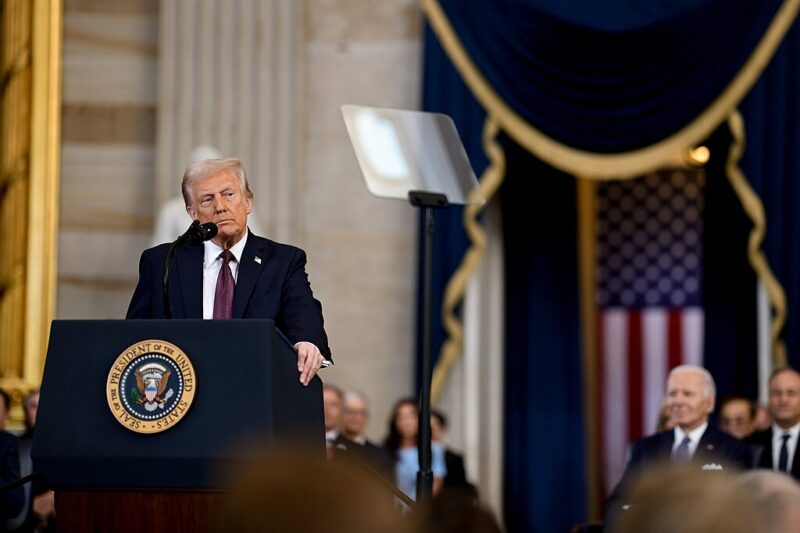
According to a report published on December 11, 2025, by The Washington Post, President Donald Trump is considering an executive order that would direct federal agencies to reclassify marijuana from Schedule I to Schedule III under the Controlled Substances Act. This potential shift, which could occur as early as Monday, December 15, would represent a significant federal policy adjustment, easing certain restrictions while maintaining prohibitions on non-medical use. However, a White House official stated that no final decisions have been made, according to Forbes.
The development follows discussions in the Oval Office involving cannabis industry executives, during which Trump consulted House Speaker Mike Johnson, who expressed reservations, sources told The Washington Post. CNBC reported on December 12 that a source familiar with the matter indicated the order could be signed early the following week.
Economic and Research Implications
Rescheduling would align marijuana with substances such as ketamine and certain codeine combinations, acknowledging accepted medical applications and lower abuse potential compared to Schedule I drugs. A companion analysis by The Washington Post on December 12 outlined potential consumer impacts, including expanded research and possible Medicare coverage for certain cannabidiol treatments.
For the cannabis industry, estimated at over $32 billion, the primary benefit would involve alleviation of Internal Revenue Code Section 280E restrictions, which currently prevent deductions of ordinary business expenses and result in effective tax rates reaching 80%.
Brian Vicente, founding partner at Vicente LLP, described the prospect: “This monumental change will have a massive, positive effect on thousands of state-legal cannabis businesses around the country. One dominating inequity cannabis businesses face is the inability to deduct regular business expenses, since they sell a Schedule I substance. Rescheduling releases cannabis businesses from the crippling tax burden they have been shackled with and allow these businesses to grow and prosper.”
Ryan Hunter, chief revenue officer at Spherex, noted parallels with existing prescription drugs: “By moving cannabis to Schedule 3, Cannabis will be treated similarly to ketamine, Tylenol + Codeine, and anabolic steroids—all drugs that have been approved by the FDA for use with a doctor’s prescription.” He suggested this could enhance patient access in non-medical states and prioritize therapeutic products.
Industry Perspectives
Advocates within the sector voiced measured support. Jim Belushi, founder of Belushi’s Farm, exclaimed: “ABOUT TIME!!!” Mark Lewis, president of specialty banking at Lüt, called it potentially “the single most important drug policy move in decades,” citing opportunities for research and access, though he noted ongoing challenges absent measures like the SAFE Banking Act.
Jasmine Johnson, CEO of GŪD Essence, emphasized preparedness: “A reclassification would help accelerate scientific research, expand access for patients, and reduce unnecessary barriers for regulated operators who are doing the work the right way.”
Yet coherence concerns persist amid recent hemp product restrictions. Tamara Anderson, founder of Culinary & Cannabis, questioned timing: “Everyone keeps asking why this, why now? The truth is, we need rescheduling, but we need it done responsibly. One minute the administration is talking about recalling hemp products, the next they’re floating a reschedule.”
Tyler Cartwright, co-founder and chief operating officer at Higher Standards, highlighted inconsistencies: “We’re now looking at a potential future where marijuana, which remains federally prohibited, gets rescheduled based on its medical benefits, while hemp-derived wellness products that have been legal and regulated under the 2018 Farm Bill for seven years get shut down. That’s not coherent policy.”
Skepticism and Potential Hurdles
Critics raised alarms over pharmaceutical dominance and regulatory shifts. Josh Kesselman, publisher of High Times Magazine and founder of RAW Rolling Papers, warned of a “false flag,” asserting it could enable big pharma to market synthetic THC prescriptions while imposing new federal violations on dispensaries under the Food, Drug, and Cosmetic Act.
Jeffrey Miller, chief executive officer of HoneyProjects, welcomed tax relief but urged caution: “Any loosening of federal cannabis policy deserves acknowledgment, but a move to Schedule III introduces real uncertainty for small businesses in state-regulated markets.”
Harrison Bard, CEO and co-founder of Custom Cones USA and DaySavers, saw benefits for veterans but risks for independents. Alex Gonzalez, president and co-founder of Calyx Containers, anticipated stricter standards: “Whenever the White House moves forward with Schedule III, the federal government is effectively telling us that cannabis is medicine. And if it’s medicine, ‘good enough’ cannabis practices won’t cut it anymore.”
Sierra Elaina, CEO of Lehua Brands, regarded it as overdue legitimacy, while Gennaro Luce, founder and CEO of CannaLnx, stressed insurance frameworks for affordability. Sasha Nutgent, vice president of cannabis retail at Housing Works Cannabis Co., anticipated incentives for legal operations, particularly among justice-impacted owners.
Internal resistance includes figures like DEA Administrator Terrance Cole, who has not prioritized rescheduling, and potential legal challenges from groups such as Smart Approaches to Marijuana, as noted in earlier coverage.
Reuters reported on December 12 that cannabis stocks surged following the initial disclosures, reflecting market anticipation. Should the directive advance, it would build on a stalled Biden-era review, marking pragmatic alignment with scientific assessments and state policies in 40 jurisdictions, though leaving broader federal-state conflicts unresolved.