At EDUN Family Farm in Parachute, Colorado, innovation grows from the ground up. Co-founder Michelle Brinkerhoff is rewriting the rules of cannabis horticulture by combining regenerative farming practices with modern process control and an uncompromising commitment to quality.
“We’re not growing like everybody else,” Brinkerhoff said. “This is a product people turn to as a medicinal alternative, and I’m not willing to compromise that.”
The Brinkerhoff farm is EDUN’s heart and soul. A state-of-the-art facility that shares creativity and excitement with a team of seasoned growers. The farm is a perfect union of form and function, earning them a reputation for authenticity and credibility in a highly competitive industry.
Supercharged Regenerative Soil
At the core of EDUN’s cultivation philosophy is soil. Alive, dynamic and capable of producing plants that reflect the care behind them. Brinkerhoff’s team uses a form of bokashi composting, a fermentation method that relies on anaerobic bacteria rather than open-air decomposition.
“Instead of aerating a compost pile and turning it, we fill a bin, seal it, and let the bacteria cannibalize it,” she said. “It liquifies itself. Depending on what’s in the bin, it can be fully composted within a month.”
The process transforms waste from local breweries, wineries and grocery stores into a nutrient-rich “super compost.” Even items typically avoided in traditional composting, like chicken bones and potato skins, are fair game.
“It’s part of a community loop,” Brinkerhoff said. “The breweries and stores give us what they’d throw away, and we turn it into something that feeds life.”
The result is a closed-loop system that strengthens microbial life in the soil, improves nutrient availability and reduces waste.
Where Technology Meets Tradition
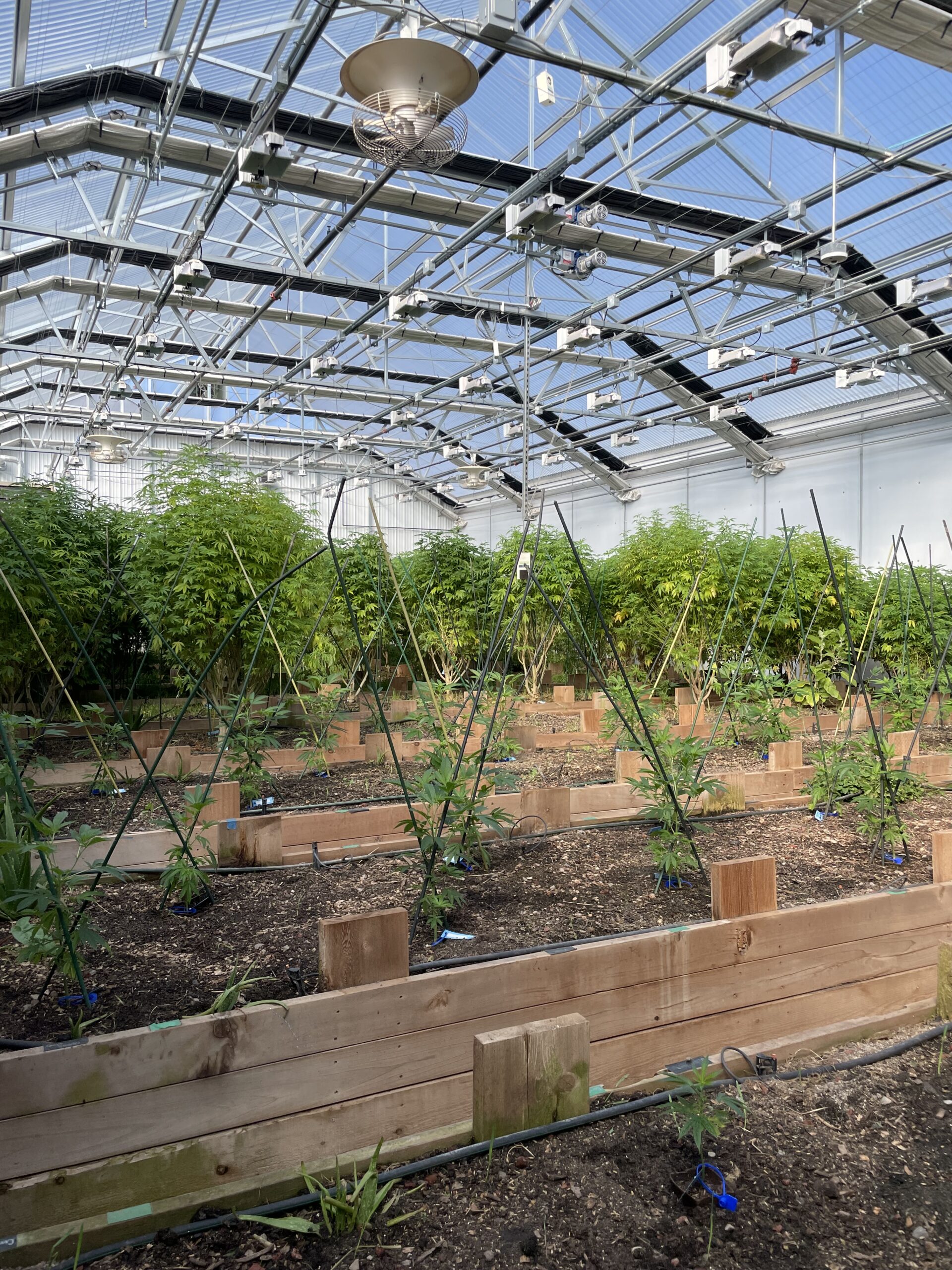
While many large-scale cannabis cultivators pursue efficiency through automation and chemical additives, EDUN relies on biological intelligence and the natural technology of living soil.
Brinkerhoff draws from Korean Natural Farming (KNF), a sustainable cultivation method developed by Master Cho Han Kyu. KNF emphasizes using indigenous microorganisms and locally sourced inputs to create balanced ecosystems.
“KNF is the foundation,” she said. “It’s about using what you already have. Your soil, your microbes, your environment create balance.”
She also incorporates ideas from Jadam, a system developed by Cho’s son that expands on KNF principles from a different scientific perspective. “Each adds tools to the natural farming toolbox,” she said. “Together, they help us stay true to the earth.”
Although EDUN’s gardens may not use robotics or climate-controlled vertical racks, their methods are deeply technical. Brinkerhoff describes how plant roots communicate with microbes in search of nutrients.
“A root might signal that it needs iron,” she said. “The indigenous microbes know where to find it in the crushed red rock and wood chips deep in our beds and they bring it back to the plant. The soil feeds the plant, and when the plant dies, it feeds the soil again.”
Beyond “Organic”
Brinkerhoff doesn’t describe EDUN as an organic farm. After researching U.S. Department of Agriculture standards, she was disappointed to find that many “organic” chemicals are still permitted for use.
“The first 25 pages of approved ‘organic’ chemicals are still chemicals,” she said. “So no, we’re beyond organic.”
That stance is both philosophical and practical. While “organic” has become a marketing term, “regenerative” has substance, prioritizing biodiversity, microbial health and carbon cycling.
Brinkerhoff said the approach demands more patience and experimentation than conventional growing. “We’re not getting shortcuts from fertilizers or additives,” she said. “You have to let nature set the pace.”
Quality Over Quantity
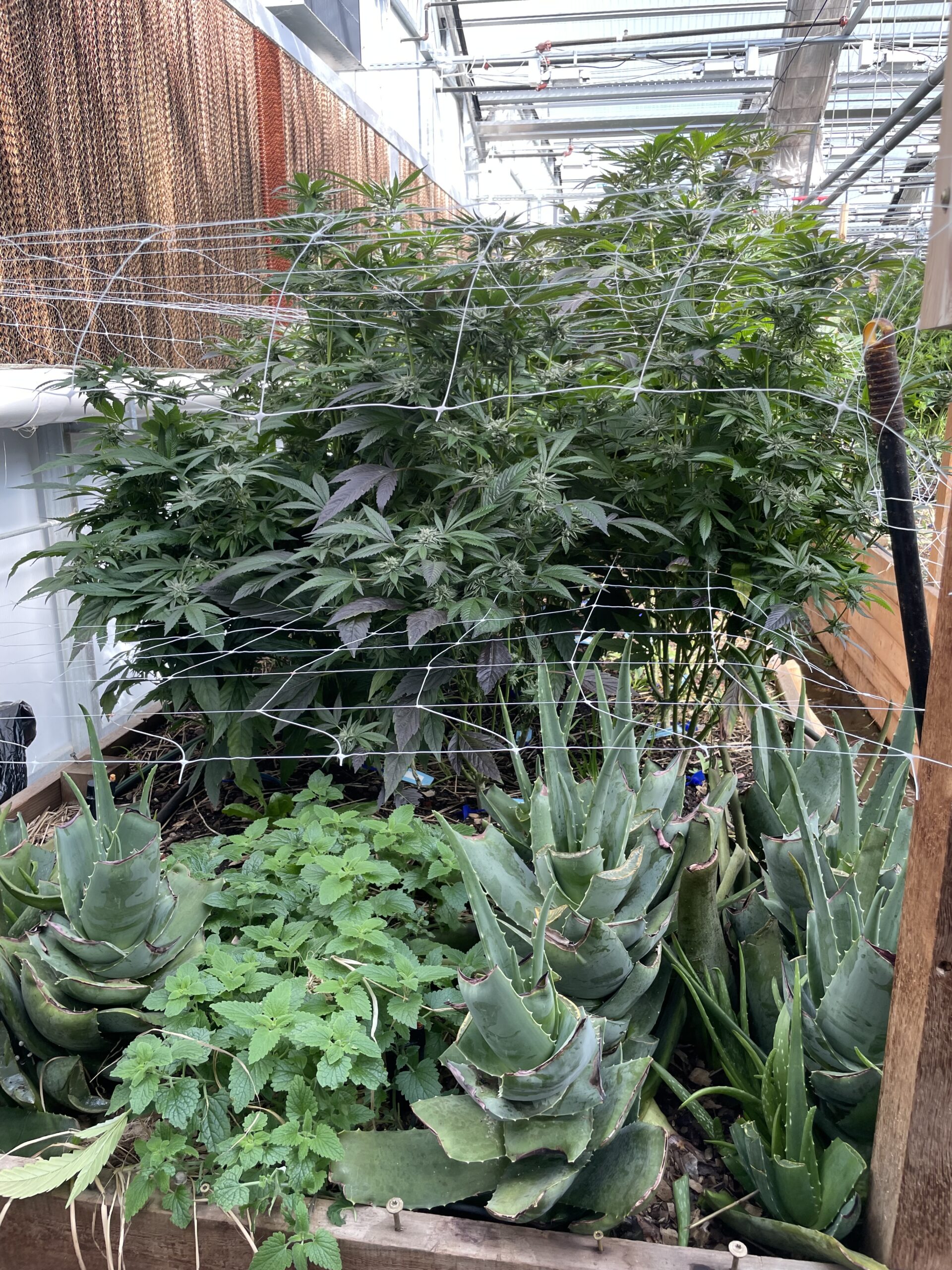
The cannabis industry often measures success in yield and speed. Brinkerhoff focuses instead on integrity and sustainability.
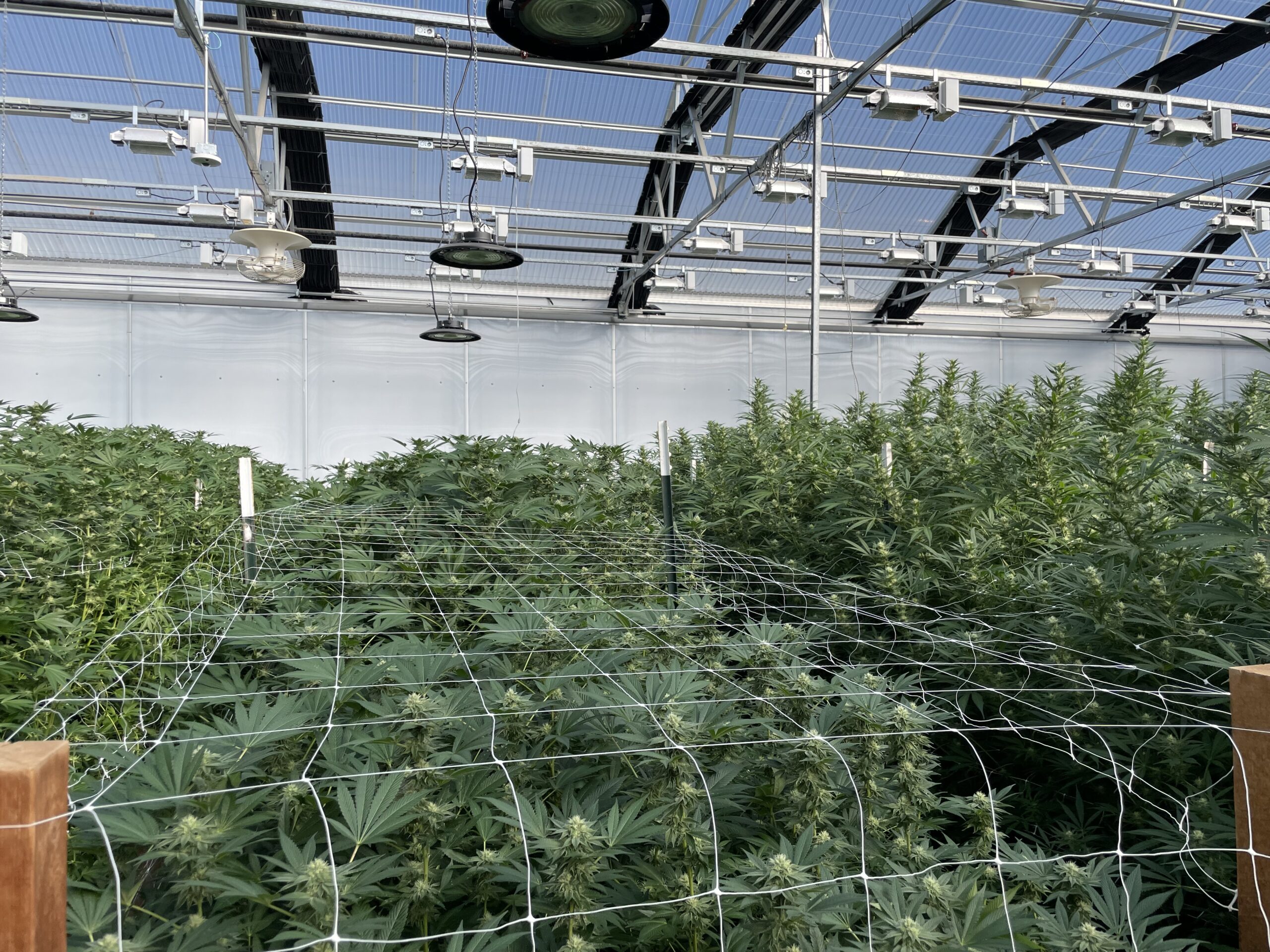
“We used to use jute twine for trellising,” she said. “It was biodegradable and regenerative, but it shed fibers that looked like blonde hair in the product. From a commercial perspective, that wasn’t acceptable.”
She eventually replaced the natural jute with synthetic trellising, a small compromise in an otherwise regenerative system. “Sometimes practicality wins,” she said. “You adapt. The goal is to minimize harm, not chase perfection.”
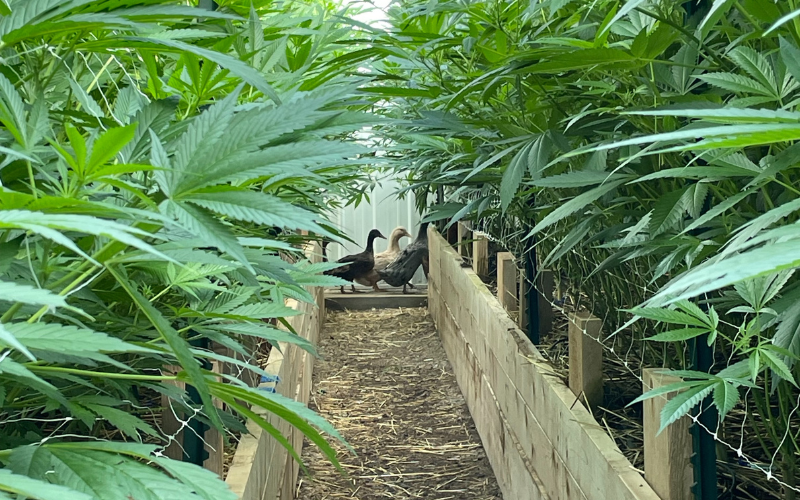
After harvest, EDUN’s grow beds are never replaced or tilled. Root systems decompose naturally, feeding the microbial networks that will support the next crop. Critters inevitably infest the soil, but they have a team of ducks on the ground to guard against slugs and roly pollies. That’s right, ducks. This is no normal grow house, people.
“We’ll never kill our soil,” Brinkerhoff said. “Other farms throw out their soil after every harvest. That’s dirt, not soil. Dirt has no life.”
Teaching the Next Generation
Brinkerhoff’s mission extends beyond cultivation. She is developing a 13-module curriculum to teach regenerative cannabis farming methods from bokashi composting to soil microbiology and natural input design.
“There’s no university course that teaches this,” she said. “If we want to change the industry, we have to teach it ourselves.”
Her goal is to help cultivators adopt more sustainable practices without sacrificing product quality or profitability. “Once people understand how living soil works, it changes the way they think about farming,” she said.
A Different Kind of Disruption
In an industry defined by rapid scaling, EDUN represents a slower, more deliberate approach rooted in ecology and ethics.
“It’s not just about cannabis,” Brinkerhoff said. “It’s about respect for the plant, the planet and the people who consume it.”
By focusing on regenerative farming and local waste reuse, EDUN offers an alternative model for a sector facing scrutiny over energy use and environmental impact.
“Real sustainability means looking at the whole system,” she said. “What you’re putting in, what you’re taking out, and what you’re giving back.”
Also Read: Hemp vs. THC
Innovation From the Ground Up
EDUN’s work highlights how natural processes and technology can align to elevate product quality. Microbial science, nutrient cycling and soil management might not sound as glamorous as automation or AI, but they represent some of the most important innovations in cannabis cultivation today.
For growers and investors seeking sustainable differentiation, Brinkerhoff’s “beyond organic” model offers a roadmap to long-term resilience.
“We don’t fight what grows here,” she said. “If something wants to live here, it’s welcome. That’s how we know our soil is alive.”
In a market crowded with fast-turn harvests and chemical shortcuts, EDUN Family Farm is proving that the most advanced technology in cannabis might just be the oldest one on Earth: living soil.