
As cannabis manufacturing matures, so does the technology behind it. What began with hand-rolled joints has evolved into sophisticated automation systems capable of producing thousands of pre-rolls every day.
For producers, these machines aren’t just about speed – they’re about consistency, labor efficiency, and the ability to scale sustainably.
Whether you’re an established operator refining your workflow or an emerging brand preparing to expand, understanding the landscape of pre-roll automation is essential.
This guide explores today’s leading pre-roll machines, outlines when it makes sense to automate, and highlights what to evaluate before making an investment. The goal is simple: help you choose the right equipment to streamline production and strengthen your bottom line in 2025 and beyond.
Quick Overview of the Best Automated Pre-Roll Machines in 2025
| Machine | Estimated Production Volume | Production Capabilities | Estimated Price | Notable Customers |
| Hefestus AuraX | 2,000+ pre-rolls per hour | Produces cones, straight rolls, blunts, and infused SKUs of all types and sizes; fully automated system designed for large-scale production. | ~$230,000 | AWH, Verano, Lowell Herb Co, STIIZY, MUNCHIES!, Juicy Joints, Jetleaf, High Grade |
| RollPros Blackbird | ~900 pre-rolls per hour | Specializes in straight-roll joints; can handle select infused products; compact design built for efficiency. | ~$225,000 | Mello, Rebel Spirit, Green Thumb Industries |
| Accelerant PRO2 | ~2,150 pre-rolls per hour | Produces cones and straight rolls, including infused products; operates under a pay-per-joint “production-as-a-service” model. | Pay-per-joint pricing model | GTI, Ascend, TerrAscend |
| PreRoll-Er 200 | ~1,300 pre-rolls per hour | Fills cones and tubes, including infused variants; integrates automatic loading, exit-weight checks, and reject stations for precision. | ~$275,000 | Garden Remedies |
| APEHEX Pre-Roll Machine | ~1,200 pre-rolls per hour | Supports cone sizes from 0.3-1.25 g and select infused products; single-operator design for compact facilities. | Unknown | Leafers, Chico California Cannabis Company |
Best Pre-Roll Machines in 2025
From each machine’s major features to what type of operation it’s best for, here’s a look at the best pre-roll machines in 2025.
1. Best Overall Pre-Roll Machine: Hefestus AuraX
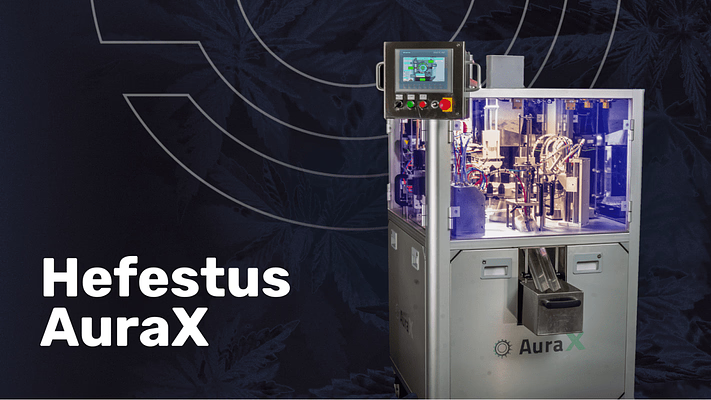
For high-volume operators, the Hefestus AuraX represents one of the most complete automation systems in pre-roll manufacturing. The machine is fully automated and produces over 2,000 pre-rolls per hour with just one operator. Optional modules like the Weight Checker and AutoTube improve efficiency, reduce waste, and help you maintain tighter quality control without adding headcount.
Because the AuraX handles cones, blunts, and infused materials in virtually any size, you can keep your SKU strategy agile as market demand shifts. You won’t need to invest in separate systems for different product types, which helps preserve cash flow as you expand. While the $230,000 price tag places it firmly in the enterprise category, the built-in training and SOP development ensure your team can start running production almost immediately and keep uptime high.
Best for: Operators producing 10,000-30,000 pre-rolls per month who want to scale with minimal downtime.
Pros: 2,000+ pre-rolls per hour, wide format compatibility, complete training and support.
Cons: High upfront cost, oversized capacity for small facilities.
2. Best Roll-Style Pre-Roll Machine: RollPros Blackbird
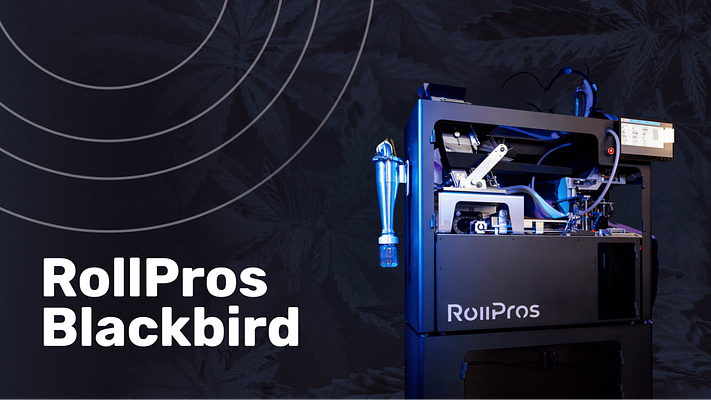
If you’re focused exclusively on cigarette-style joints, the RollPros Blackbird is a simple and reliable way to automate that process. It produces about 900 straight-roll joints per hour in a compact footprint, and its TruRoll technology keeps the draw smooth and the burn consistent. For single-style brands, that kind of uniformity can help protect your reputation.
Where you’ll need to think ahead is in flexibility. The Blackbird can’t produce cones or blunts, so if you decide to add new SKUs later, you’ll need either manual labor or a second machine.
By comparison, the Hefestus AuraX can handle both straight and cone-style joints while delivering more than twice the throughput (systems like the PreRoll-Er 200 and APEHEX have things to offer in this department, too). If your long-term plan involves diversification or co-packing for multiple brands, versatility becomes critical for keeping your ROI healthy.
Best for: Brands producing only straight-roll joints that want dependable mid-volume automation.
Pros: Compact design, consistent output, accessible price.
Cons: Single-format only, frequent cleaning, no path for product expansion.
3. Best Pay-Per-Joint Pre-Roll Machine: Accelerant PRO2
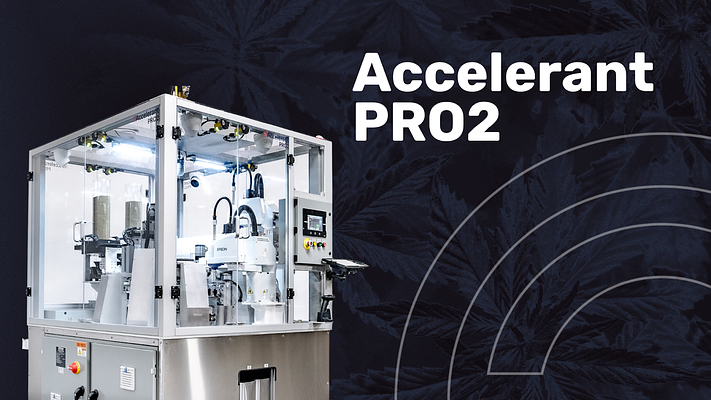
If you want to automate pre-roll production without tying up capital, the Accelerant PRO2 offers a unique pay-per-joint model. You can start producing about 1,500 cone-style pre-rolls per hour right away, and Accelerant takes care of setup, training, and maintenance. This model helps you scale production while keeping your upfront costs near zero.
Over time, though, those per-joint fees can eat into your margins. Once your demand stabilizes, owning your equipment usually makes more sense. The PRO2 is a smart way to test automation quickly, but if you expect to produce less than 10,000-20,000 joints per month, ownership may deliver better long-term economics.
Best for: High-volume manufacturers who need multiple machines and assured uptime, innovation, and support, or new or cash-limited operators who want immediate automation capacity without major up-front investment.
Pros: No upfront payment, good output, managed uptime and service.
Cons: Rising cost at scale, limited long-term ROI, no equipment ownership.
4. Best Versatile Pre-Roll Machine for Mid-Size Operations: PreRoll-Er-200
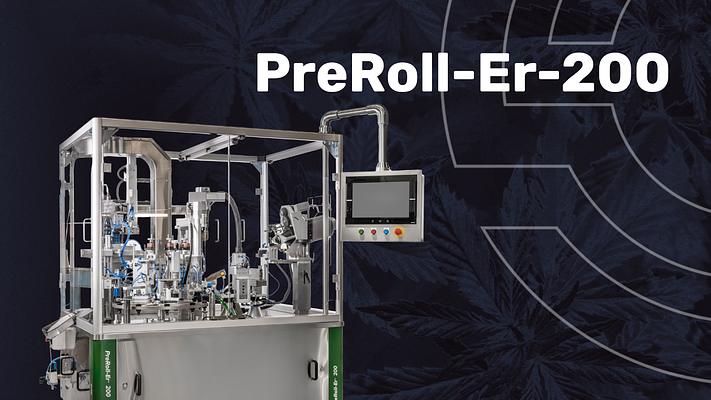
If you want precision and versatility without moving into full enterprise scale, the PreRoll-Er 200 fits that middle ground. It produces around 1,300 pre-rolls per hour and can fill both cones and tubes, including infused options. Automated loading and exit-weight checks keep your output consistent, while built-in reject stations and ±0.01 g accuracy protect compliance and product integrity.
For mid-tier producers, that level of control can make your product stand out. But if you’re planning to scale beyond 25,000 joints per month, you may quickly reach the system’s limits. The Hefestus AuraX, for comparison, produces 2,000 per hour with similar versatility – giving you a higher ceiling and faster payback once demand grows.
Best for: Operators prioritizing accuracy and SKU flexibility in a mid-volume range.
Pros: Infused-ready, multi-format capability, strong QA features.
Cons: Lower throughput relative to price, higher upkeep, limited expansion capacity.
5. Best Compact Pre-Roll Machine: APEHEX Pre-Roll Machine
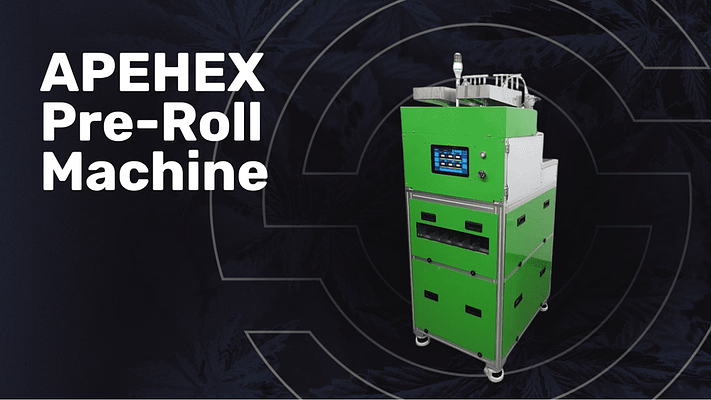
If you’re running a smaller shop and want to start automating, the APEHEX is a good entry point. One operator can manage up to 1,200 pre-rolls per hour across cone sizes from 0.3 g to 1.25 g. The package includes training, which means you can get up and running quickly without hiring extra staff.
You’ll want to be patient during setup. Operators often report longer calibration times and difficulty sustaining maximum throughput. The APEHEX also offers less weight precision and format flexibility than premium machines like the Hefestus AuraX.
If your goal is to keep things small and consistent, this unit gets the job done. But if you’re planning to grow, investing in a system built for scalability will save you time and cost later.
Best for: Boutique producers automating 10,000-20,000 joints per month.
Pros: Single-operator design, variable cone sizes, included training.
Cons: Slower calibration, moderate accuracy, limited output ceiling.
What to Look For In a Pre-Roll Machine
Here are the main factors you’ll want to weigh when researching which pre-roll machine is best for your business:
Production Capacity and Labor Efficiency
When you invest in automation, the key metric to evaluate is how many pre-rolls your system can produce per hour with one operator. High-output, fully automated systems can replace multiple employees while maintaining consistent quality.
A model such as the Hefestus AuraX, for example, reaches more than 2,000 pre-rolls per hour with a single operator.
Smaller or semi-automated setups may seem cost-effective initially, but once labor, downtime, and waste are considered, their advantages often diminish.
Versatility and SKU Expansion
If your goal is to expand your product line or adapt to shifting market trends, machine versatility matters.
Equipment that supports cones, straight rolls, blunts, and infused products gives you flexibility to meet evolving consumer demand.
Systems like the AuraX and PreRoll-Er 200 handle multiple formats and sizes, allowing you to add new SKUs without purchasing additional machines or reverting to manual production methods.
Reliability and Technical Support
Downtime is one of the most expensive challenges in pre-roll production. Choosing a reliable system with a strong service program and on-site training can protect your investment and reduce operational risk.
Hefestus, for instance, provides 24/7 technical assistance from U.S. and Israeli technicians, along with a week of training and SOP development, so operators can achieve consistent uptime.
Strong support and quick maintenance are often what separate profit-driving systems from those that create costly delays.
ROI and Total Cost of Ownership
Evaluating true ROI goes beyond the sticker price. While lower-cost or pay-per-joint models may appear budget-friendly, high-efficiency automated machines can deliver better profitability over time.
Considering factors such as labor reduction, maintenance, and uptime reveals the full picture. Systems that sustain higher throughput with minimal downtime generally achieve faster payback and stronger long-term margins.
Financing and Accessibility
Capital limitations are a major hurdle for many growing facilities. Financing options can make automation more accessible by reducing upfront costs and supporting sustainable scale. Flexible financing programs help operators expand production capacity without disrupting cash flow.
Pay-per-joint models work well for short-term needs, but equipment ownership typically offers greater control over costs and stronger long-term profitability.
Conclusion: Choosing the Best Pre-Roll Machine for Your Business
For producers ready to scale efficiently while maintaining product quality, the Hefestus AuraX stands out as one of the most capable and future-focused options on the market.
It’s a smart investment for brands seeking consistency, flexibility, and reliable long-term ROI.
On the other hand, systems like the Accelerant PRO2 might be a better fit if you have limited capital to expend in the beginning but need to start automating your production immediately.
Ultimately, finding the right pre-roll machine comes down to understanding where your business is today and where you plan to take it next.
By evaluating your production volume, growth goals, and desired level of automation, you can identify the system that truly aligns with your operation.